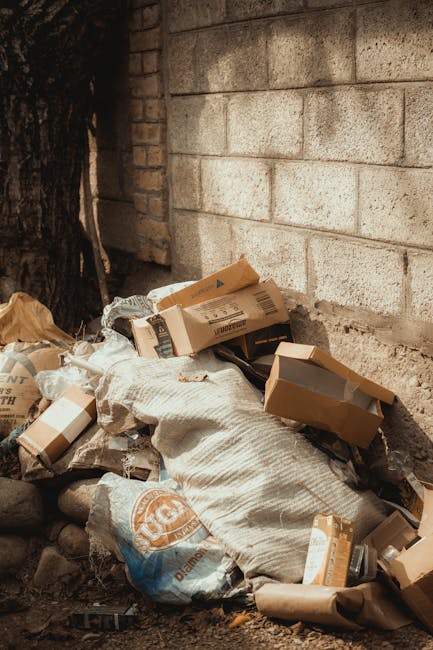
Avoid hidden rubbish removal costs in Hanwell what to know
If you are trying to avoid hidden rubbish removal costs in Hanwell what to know, you are probably doing the sensible thing: checking the fine print before anyone turns up with a van and a vague invoice. That caution pays off. In rubbish removal, the quoted price can look fine at first glance, then suddenly change because of access issues, extra labour, bulky items, restricted waste, or simply because the job was never described clearly enough.
This guide breaks the process down in plain English. You will learn how pricing usually works, which charges catch people out, what to ask before you book, and how to compare services without getting lost in jargon. It is written for real situations too - a flat clearance in Hanwell after a tenancy ends, a garage full of old stuff, builders' waste after a refurb, or a last-minute garden tidy-up when the weekend already feels too short.
Truth be told, rubbish removal should be straightforward. If the pricing feels mysterious, that is a warning sign. Let's make it much less mysterious.
Table of Contents
- Why hidden rubbish removal costs matter
- How rubbish removal pricing usually works
- Key benefits of clear pricing
- Who this is for and when it makes sense
- Step-by-step guidance
- Expert tips for better results
- Common mistakes to avoid
- Tools, resources and recommendations
- Law, compliance, standards and best practice
- Options and comparison table
- Case study or real-world example
- Practical checklist
- Conclusion
- Frequently asked questions
Why hidden rubbish removal costs matter
Hidden costs matter because rubbish removal is often booked under time pressure. A landlord wants a property cleared quickly. A homeowner needs space back before a viewing. A business just wants the office emptied without the week becoming a mess. That urgency can make people accept a price too quickly, and that is where the surprises begin.
In Hanwell, as in much of West London, properties can bring awkward access, narrow staircases, controlled parking, or shared hallways. None of that is unusual, but all of it can affect the final bill if it is not discussed upfront. A quote that sounds low may simply assume easy access and light waste. Once the team arrives and sees three flights of stairs, a broken wardrobe, and a fridge that needs special handling, the price can change. Sometimes fairly. Sometimes not.
What makes this tricky is that some extra charges are legitimate. Extra labour can be fair if the job is bigger than described. Disposal fees for certain items can also be reasonable. The problem is when the customer only finds this out on the day. That is the bit people remember, and rightly so.
Expert summary: the safest way to keep rubbish removal costs under control is to treat the quote like a mini contract. Clear description, clear access, clear item list, clear waste type, and clear terms. If one of those parts is fuzzy, the price can wobble later on.
How rubbish removal pricing usually works
Most rubbish removal services price jobs using a blend of volume, weight, waste type, labour, and access. That sounds technical, but it is simpler than it looks.
Volume is about how much space your waste takes up in a van or truck. Weight matters because some waste is heavier to transport and dispose of. Waste type matters because general household rubbish is usually different from builders' rubble, electrical items, mattresses, or hazardous materials. Labour includes the number of people needed and how long loading will take. Access covers things like stairs, long walks from the property to the vehicle, parking distance, and whether the team can park close by.
Some companies give a rough estimate first and confirm on arrival. Others prefer photographs or a short description before giving a more accurate price. Neither approach is automatically better, but the best services explain what the quote includes and what could change it. That transparency is what you want.
If you are comparing services, look closely at whether the quote is:
- based on photos, a call, or an on-site assessment
- inclusive of labour and loading
- inclusive of disposal or recycling charges
- clear about extra charges for awkward access or special items
- linked to a written summary, even if brief
You may also see references to "all-in pricing" or "from" pricing. All-in is usually easier to understand, but only if the scope is properly defined. A "from" price can be honest, yet still leave room for added costs if the job is different from what was described. That part needs a careful eye.
If you want to check broader pricing details first, the page on pricing and quotes is a useful place to start before you book anything.
Key benefits and practical advantages
A clear, upfront quote does more than save money. It saves hassle, time, and a fair bit of frustration too. In practice, the benefits show up in very ordinary ways.
- Better budgeting: you know what the job should cost before the work starts.
- Fewer disputes: when the terms are clear, there is less room for awkward surprises.
- Faster decisions: comparing quotes is simpler when they are written in a similar format.
- Less disruption: the crew can arrive prepared, which usually means the job runs smoother.
- Improved trust: a transparent price is often a sign of a more professional operator.
There is also a practical side that people overlook. Hidden costs often lead to a second round of admin - calls, photos, explanations, revised invoices, maybe even a complaint. Nobody wants to spend their lunch break arguing over whether an old sofa counts as one item or two because it has a detached footstool. Slightly absurd, but it happens.
Good pricing also helps you choose the right removal method. Sometimes a full van load is overkill. Sometimes a skip is not the best option because you have limited space or need collection quickly. And sometimes a specialist service is better than a general one, especially for heavy appliances, furniture, or mixed waste.
If your job is more specific, these related pages can help you match the service to the waste type: general waste removal, furniture disposal, fridge and appliance removal, and builders' waste clearance.
Who this is for and when it makes sense
This advice is for anyone booking rubbish removal in Hanwell, but a few situations deserve extra attention because they are more likely to trigger surprise charges.
Homeowners and tenants often need clearance after moving, renovating, or simply reclaiming storage space. If you have a loft, garage, or spare room piled high with mixed items, the final price depends on what is actually there, not what it looked like from the doorway.
Landlords and letting agents need clarity because time pressure is high. A tenant move-out can leave furniture, bags, old mattresses, and the odd appliance. The job may look simple at first, but the cost can rise if access is poor or if items need special disposal.
Businesses need reliable pricing because they are usually working to schedules and budgets. Office clearance, confidential shredding, and business waste removal all need a more structured quote than a casual "we'll see on the day" arrangement. That approach is fine for some jobs, but not when staff time and compliance matter.
Builders and tradespeople should be especially careful. Builders' waste is heavy, dusty, and often more expensive to dispose of than expected. Broken plasterboard, tiles, soil, and mixed rubble can change the price quickly. One small refurb can become a larger disposal job than the skip quote suggested. Happens all the time.
For larger commercial clearances, it is worth looking at business waste removal and office clearance so you are not mixing up different kinds of work.
Step-by-step guidance
Here is a practical way to avoid hidden rubbish removal costs without making the process more complicated than it needs to be.
- List everything that needs to go. Be specific. "Old furniture" is a start, but "two wardrobes, one mattress, one broken chest of drawers, and three bin bags" is much better.
- Note the access conditions. Mention stairs, basement access, narrow hallways, no lift, parking restrictions, distance from property to van, or any time limits for loading.
- Separate unusual items. Appliances, fridges, heavy rubble, paint tins, chemicals, and confidential paper can change the scope of the job.
- Ask what is included. Check whether labour, loading, disposal, recycling, VAT if relevant, and congestion or parking-related issues are all accounted for.
- Ask what might cost extra. A fair provider should tell you the common reasons a quote can change. If they dodge the question, that is a red flag.
- Request a written summary. A short email or booking confirmation is often enough. You do not need legal drama. Just a clear record.
- Compare like with like. Do not compare a "van arrives and loads everything" quote with a "we only collect curbside waste" quote. They are not the same thing.
- Confirm timing and payment. Ask when payment is taken and how. The more ordinary the process feels, the better.
A small but useful habit: take two or three photos before you book. One wide shot, one close-up, one photo of anything awkward or heavy. It takes a minute, and it can save a whole lot of back-and-forth later.
If you are planning the booking itself, you can use the online booking option once you have your details ready.
Expert tips for better results
These are the sorts of things people learn after one or two awkward jobs. Better to learn them now.
Be precise about mixed waste. Mixed loads are often where pricing gets fuzzy. If your pile includes general rubbish, wood, metal, textiles, and a broken appliance, say so. The mix affects sorting and disposal.
Check for fragile assumptions. Some quotes assume easy loading from ground level. If the team has to carry items down three flights or around the back of a building, that needs to be discussed. It is not nitpicking. It is the job.
Ask about restricted items early. Hazardous waste, certain electrical goods, and some chemicals need specialist handling. The service may accept them, but the cost and process can differ. You do not want to find this out when the van is already outside and the kettle has just boiled.
Look for evidence of good practice, not just low prices. Clear terms, insurance, safety standards, and decent customer communication matter more than shaving a few pounds off the quote. Cheap can become expensive fast if something goes wrong.
Remember recycling and reuse. A thoughtful provider may sort materials for reuse or recycling where possible. That does not always lower the price directly, but it can be part of a more responsible service. If sustainability matters to you, it is worth asking how the waste will be handled.
You may also find the page on recycling and sustainability helpful if you want a better understanding of what happens after collection.
Common mistakes to avoid
Most hidden costs come from the same few mistakes. Nothing dramatic. Just easy-to-make assumptions.
- Assuming the quote covers everything: if the provider has not said it, do not assume it is included.
- Under-describing the waste: saying "a few items" when it is actually half a garage is a recipe for price changes.
- Forgetting access details: stairs, parking, and carrying distance matter more than people think.
- Ignoring special items: mattresses, sofas, fridges, and hazardous materials can all affect the cost.
- Not reading the booking terms: even short terms can contain useful clues about fees and responsibilities.
- Comparing prices too quickly: the lowest number is not always the best value, especially if the scope is vague.
One subtle mistake is the "I'll just explain it on the day" approach. Sometimes that works. Often it does not. The issue is that the person giving the quote may not be the same person doing the collection, so the message can get muddled. A small gap in communication, and there goes your afternoon.
Tools, resources and recommendations
You do not need any fancy tools to avoid hidden rubbish removal charges. A phone, a few photos, and a short checklist are usually enough. Still, a few practical resources on the service site can make decision-making easier.
- pricing and quotes for understanding how the service structures estimates
- what can go in a skip if you are comparing removal methods
- payment and security if you want reassurance about the payment process
- insurance and safety for added peace of mind on site
- complaints procedure if you want to know how issues are handled
A simple recommendation: keep one folder on your phone for rubbish removal photos. Label it with the date and the property. That way, if you need to compare quotes or answer a follow-up question, you are not hunting through a hundred screenshots of weekend plans and delivery confirmations. We have all done that.
If you are clearing specific items, these service pages can help you narrow the job more accurately: mattress and sofa disposal, furniture clearance, garage clearance, loft clearance, and garden clearance.
Law, compliance, standards and best practice
Rubbish removal is not only about convenience. There are legal and practical responsibilities around how waste is handled, especially when it leaves your property. You do not need to memorise legislation to protect yourself, but you should expect the service to follow normal UK waste-handling practice.
As a customer, the most useful rule is simple: use a provider that can explain how waste is collected, handled, and disposed of responsibly. For businesses, this is even more important. Office contents can include confidential material, electronics, and items with privacy or safety implications. In those cases, services such as confidential shredding or specialist waste handling may be appropriate.
Hazardous items need extra care. Paint, chemicals, oils, some cleaners, and other problematic materials should not be treated like ordinary rubbish. If you are unsure, ask before booking rather than after the van has arrived. That is one of those moments where a five-minute question can save a lot of trouble.
Best practice also includes:
- clear communication about waste type and quantity
- safe loading and lifting practices
- responsible disposal routes
- reasonable transparency on charges
- respect for property, neighbours, and access rules
For more detail on service standards and operational expectations, the pages on health and safety policy and insurance and safety are worth a look.
Options and comparison table
If you are deciding between rubbish removal, a skip, or a specialist clearance, the best choice depends on the job size, access, and how quickly you need the space cleared. There is no one-size-fits-all answer, annoyingly enough.
| Option | Best for | Possible cost risks | Key advantage |
|---|---|---|---|
| Man and van rubbish removal | Mixed household waste, furniture, quick clearances | Extra labour, difficult access, unlisted heavy items | Convenient and usually fast |
| Skip hire | Projects where waste can be loaded over time | Permit issues, overfilling, waste-type restrictions | Good for ongoing DIY or renovation waste |
| Specialist clearance | Lofts, garages, offices, furniture, appliances | Special item fees, access charges if not declared | Better suited to specific waste streams |
If you want to understand skip limitations before choosing that route, the page on what can go in a skip gives a useful overview. And if you are booking for a house move or a tenancy end, house clearance and flat clearance are often more appropriate than a generic waste collection.
Case study or real-world example
Here is a realistic example from a typical Hanwell clearance scenario. A customer wants a garage cleared before a new boiler is installed. At first, it sounds simple: a few boxes, an old bicycle, some timber, a broken shelf unit, and a fridge in the corner. Easy, right?
On inspection, the job turns out to include two heavy cabinets, damp cardboard, builders' rubble from a small repair, and a fridge that needs separate handling. The garage is down a narrow path, and the van cannot stop directly outside the gate. None of this is outrageous, but each detail affects time and loading effort. If those details were not shared in advance, the original quote could be too low.
The lesson is not "expect the worst." It is simply this: tell the whole story upfront. A few extra minutes of description leads to a better quote, less stress, and a smoother collection. The team arrives knowing what to expect. You get rid of the clutter. Everyone goes home on time. Nice, boring, ideal.
That same approach works for office clearances too, especially when you are clearing desks, filing cabinets, monitors, and confidential paperwork. For those jobs, office clearance and confidential shredding can be the more sensible route.
Practical checklist
Use this quick checklist before confirming a rubbish removal booking in Hanwell.
- Have I listed every item that needs collecting?
- Have I described the waste type clearly?
- Have I mentioned stairs, parking, and access restrictions?
- Have I checked whether labour and disposal are included?
- Have I asked about extra fees for heavy, bulky, or special items?
- Have I confirmed whether the quote is fixed or estimated?
- Have I asked about recycling, reuse, or special handling where relevant?
- Have I kept photos of the waste and access route?
- Have I read the booking terms or confirmation carefully?
- Have I compared more than one quote on the same basis?
Quick takeaway: the cheapest quote is not always the cheapest job. Clear information at the start usually saves more money than chasing the lowest headline price.
Conclusion
To avoid hidden rubbish removal costs in Hanwell, the real trick is not complicated: describe the job properly, ask the right questions, and make sure the quote matches the actual work. Most surprise charges come from missing information, not from the removal itself. When you slow down just enough to clarify the details, the process becomes far more predictable.
That matters whether you are clearing a single bulky item, a packed loft, a shop stockroom, or an entire family home. A transparent quote gives you control, and control makes the whole experience feel less like guesswork and more like a plan. Which, let's face it, is what you want when there is already enough going on.
If you are ready to take the next step, compare the relevant service pages, check the pricing details, and make sure your booking reflects the real job rather than a rough guess.
Get a free quote today and see how much you can save.
Sometimes the best outcome is simply this: the waste goes, the space returns, and the bill makes sense. That is a decent day's work.
Frequently Asked Questions
What are the most common hidden rubbish removal costs?
Common extras include additional labour for stairs or long carries, charges for heavy or bulky items, special disposal fees for appliances or hazardous waste, and price changes when the waste volume is larger than described.
How can I make sure my rubbish removal quote is accurate?
Give a full item list, include photos, explain access issues, and mention anything unusual such as fridges, mattresses, rubble, or confidential paperwork. The more detail you share, the closer the quote should be to the final price.
Is a fixed quote always better than an estimate?
Not always, but a fixed quote is easier to understand if the job scope is clear. An estimate can still be fair if the company explains what might change and why. The key is transparency, not the label alone.
Why do access issues affect rubbish removal pricing?
Access affects how long the job takes and how much lifting is involved. Narrow stairs, long walks from the property, parking restrictions, or no lift can all add time and labour, which may increase the price.
Do mattresses, sofas, and fridges usually cost more to remove?
They can, because they often need different handling or disposal arrangements. Large upholstered items and appliances may not be treated the same as general waste, so it is best to mention them early.
Should I choose rubbish removal or a skip?
Choose rubbish removal if you want fast collection and do not want waste sitting outside. Choose a skip if you need time to load waste during a project. The best option depends on access, waste type, and how the job is being done.
What should I ask before booking rubbish removal in Hanwell?
Ask what is included, what could cost extra, whether the price includes labour and disposal, how heavy or bulky items are treated, and whether the quote is fixed or subject to inspection on arrival.
Can I get rid of mixed household waste in one collection?
Usually yes, but mixed waste can affect pricing if it includes heavy materials, appliances, or restricted items. Be honest about the mix so the collection can be priced properly and handled safely.
Are there compliance issues I should care about as a customer?
Yes. You should use a provider that handles waste responsibly, follows normal UK waste practice, and gives you confidence about special items such as confidential documents or hazardous materials. Businesses should be even more careful.
How do I avoid paying twice because of a bad quote?
Compare quotes on the same basis, keep a record of what was agreed, and make sure the service knows the full scope of the job. Paying slightly more for a clear quote is often better than paying less and then getting a surprise.
What if I only have a small amount of waste?
Small jobs can still attract minimum charges, so it is worth asking whether the service is suitable for a few items rather than a larger load. Sometimes combining items into one collection is more cost-effective.
Where can I learn more about pricing and payment before booking?
The most relevant pages are pricing and quotes and payment and security. They can help you understand how the process is structured before you confirm anything.