Health and Safety Policy — Business Waste Removal Hanwell
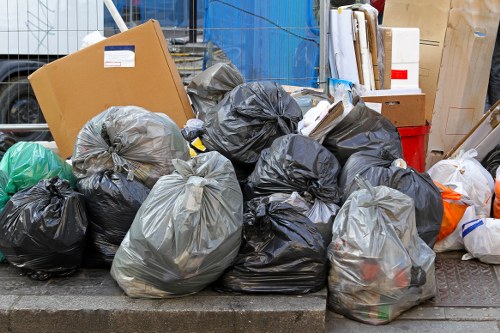 This Health and Safety policy sets out the commitments and operating principles for Business Waste Removal Hanwell and associated commercial rubbish services. It is intended to protect staff, contractors, clients and the public through clear responsibilities, documented procedures and continual improvement. The policy covers general rubbish removal, commercial waste collection, transfer and disposal, and the activities of our rubbish company service area.
Our objective is to ensure that all operations are carried out safely and in compliance with applicable legislation and best practice. Safety is integral to every job, from office administration and communications through to vehicle movements, manual handling and site clearance. We adopt a risk-based approach to manage hazards associated with business waste collection and commercial waste removal.
 The policy applies to all employees, temporary staff, sub-contractors and anyone working on behalf of the business in the rubbish removal and commercial waste removal functions. Scope includes routine waste collections, one-off clearances, recycling and handling of non-hazardous and, where licensed, controlled wastes. Exclusions are hazardous materials requiring specialized handling unless specifically contracted and permitted.
Responsibilities and Accountability
Clear lines of responsibility are established to maintain safe operations. Senior management retains ultimate responsibility for the policy and must ensure resources, training and supervision are provided. Supervisors are responsible for enforcing safe systems of work and conducting site-specific risk assessments prior to any collection or clearance.
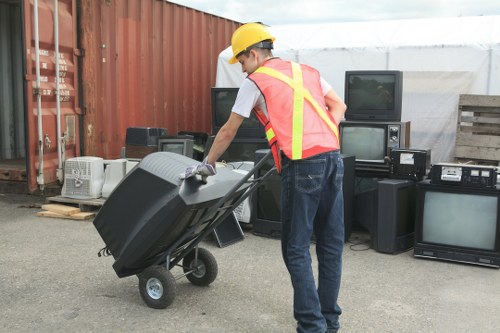 Employees and operatives must follow safe working procedures, use issued personal protective equipment (PPE) and report hazards, near misses or incidents promptly. Drivers must ensure vehicle safety checks are completed and loads are secured. Sub-contractors are expected to abide by the same standards and supply evidence of competence and insurance.
Key Duties
- Management: Policy implementation, training oversight, contractor management.
- Supervisors: Site risk control, authorising work, incident reporting.
- Operatives: Safe manual handling, correct use of equipment, PPE compliance.
Risk Assessment and Control Measures
All tasks must be preceded by a risk assessment that identifies hazards and defines controls. Typical hazards include manual handling of bulky rubbish, slips and trips, sharp objects, vehicular movement, interaction with the public and exposure to biological contaminants. Controls may include mechanical aids, safe lifting techniques, cordoning and traffic management.
Control measures for commercial waste removal and rubbish collection include the use of appropriate containment, segregation of recyclable materials, immediate removal of sharps to approved containers and restricted access to operational areas. Machinery and equipment must be maintained to a documented schedule and checked before use.
PPE Requirements: Hard hats, high-visibility clothing, gloves suitable for the waste type, safety boots and eye protection where required. Specific PPE will be identified in task assessments and must be worn at all times on-site.
Vehicle and Traffic Safety
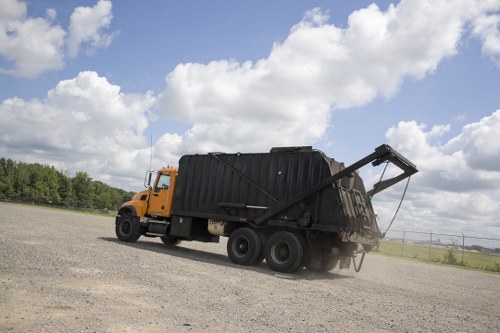
Vehicles used for rubbish removal and commercial waste transfer must be roadworthy, appropriately licenced and fitted with safety signage. Drivers must complete pre-departure checks and ensure loads are safely restrained. Reversing must be minimised; where necessary, a banksman must be present.
Operational routes within the rubbish company service area should be planned to reduce risk to the public and other road users. Delivery and collection schedules should accommodate safe loading and unloading and avoid peak pedestrian times when possible.
Hazardous and Controlled Waste
Where hazardous waste is encountered, operations will cease and the item will be isolated pending appropriate disposal by licensed handlers. Staff must not handle waste beyond their training or authorisation. Records of controlled waste movements will be maintained in line with regulatory requirements.
Training, Competence and Communication
 Training is essential for effective risk control. Induction, refresher and task-specific instruction are provided, covering manual handling, safe use of equipment, spill response and incident reporting. Competence is assessed and documented for roles that involve vehicle operation, confined space entry or hazardous waste handling.
Communication channels are established to ensure that staff receive updates on safe systems of work, changes in legislation and lessons learned from incidents. Toolbox talks and briefings will be used to reinforce safe behaviours.
 Incident reporting and investigation procedures are in place to capture root causes and corrective actions. All accidents, near misses and dangerous occurrences must be reported immediately. The organisation will take proportionate steps to prevent recurrence and will record outcomes in a central log for monitoring.
Monitoring, Review and Continuous Improvement
Regular audits, inspections and performance reviews will be carried out to ensure the policy remains effective. Key performance indicators include accident rates, near-miss frequency, compliance with vehicle checks and training completion rates. Findings will inform improvements to procedures and controls across the commercial waste removal service.
This policy is reviewed annually or following significant change, incident or legislative update. It forms part of our overall commitment to healthy and safe operations in the business waste and rubbish removal sector. Everyone involved in the service area has a role to play in maintaining a safe working environment.
Signed on behalf of the company — Date of issue and review schedule are maintained internally to ensure currency and compliance with relevant statutory obligations.
